Edge AI developers are building AI applications and products for safety-critical and regulated use cases. With NVIDIA Holoscan 1.0, these applications can…
Edge AI developers are building AI applications and products for safety-critical and regulated use cases. With NVIDIA Holoscan 1.0, these applications can incorporate real-time insights and processing in milliseconds. With the recent release of NVIDIA Holoscan 1.0, developers can more easily build production-ready applications for multimodal, real-time sensor processing.
NVIDIA SDKs have been instrumental in accelerating AI applications across a spectrum of use cases spanning smart cities, medical, and robotics. However,…
NVIDIA SDKs have been instrumental in accelerating AI applications across a spectrum of use cases spanning smart cities, medical, and robotics. However, achieving a production-grade AI solution that can deployed at the edge to support human and machine collaboration safely and securely needs both high-quality hardware and software tailored for enterprise needs. NVIDIA is again accelerating…
What is the interest in trillion-parameter models? We know many of the use cases today and interest is growing due to the promise of an increased capacity for:…
What is the interest in trillion-parameter models? We know many of the use cases today and interest is growing due to the promise of an increased capacity for: The benefits are great, but training and deploying large models can be computationally expensive and resource-intensive. Computationally efficient, cost-effective, and energy-efficient systems, architected to deliver real-time…
Large language model development is about to reach supersonic speed thanks to a collaboration between NVIDIA and Anyscale. At its annual Ray Summit developers conference, Anyscale — the company behind the fast growing open-source unified compute framework for scalable computing — announced today that it is bringing NVIDIA AI to Ray open source and the Read article >
The broadcast industry is undergoing a transformation in how content is created, managed, distributed, and consumed. This transformation includes a shift from…
The broadcast industry is undergoing a transformation in how content is created, managed, distributed, and consumed. This transformation includes a shift from traditional linear workflows bound by fixed-function devices to flexible and hybrid, software-defined systems that enable the future of live streaming.
Developers can now apply to join the early access program for NVIDIA Holoscan for Media, a software-defined platform for developing and deploying media applications on-prem, in the cloud, and at the edge.
Using Holoscan for Media, broadcasters and solution providers can leverage the latest IT and provisioning technologies and a modern container-based approach to development, orchestration, and delivery.
Holoscan for Media is an IP-based solution built on industry standards and APIs including SMPTE ST 2110, AMWA NMOS, RIST, SRT, and NDI.
The platform integrates open-source and ubiquitous technologies, breaking from the proprietary and inflexible nature of SDI and FPGA-based systems. It also enables incorporation of the latest capabilities in production—such as generative AI—without additional infrastructure investments. With Holoscan for Media, countless NVIDIA application frameworks and SDKs are made accessible to the industry for development.
This framework provides several benefits to both broadcasters and solution providers, including:
Repurposability: Use a single platform for many applications.
Lower TCO: Benefit from the cyclical cost reductions.
Flexibility: The platform is cloud-native and independent of location. An application can be developed once and deployed everywhere.
Sustainability: Provisioning technologies that drive resource sharing means that overall less equipment is required. This means lower power and cooling costs and reduced impact from shipping to and from events. Ultimately, this leads to CO2 reductions.
IP-based platform architecture
NVIDIA Holoscan targets sensor data and media processing applications deployed at-scale across countless industries, in the cloud, on premises, and at the edge. Holoscan for Media tightens the focus on broadcast and live production workflows, with the first target being on-premises deployments.
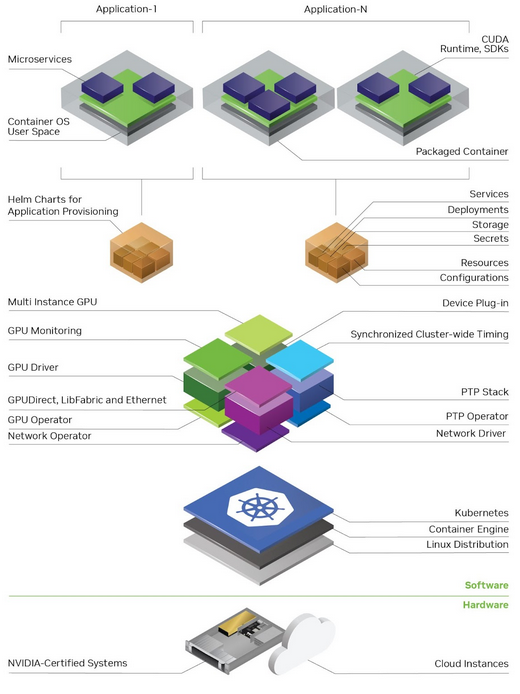
Figure 1. Holoscan for Media platform architecture
The hardware basis of the platform is therefore NVIDIA-certified systems from our partners, using NVIDIA Ampere architecture or later GPUs and NVIDIA BlueField-2 or later DPUs. The first systems are x86, but the entire software stack is multi-architecture to enable a wide range of systems and use cases with lower power consumption. In production, a minimal Holoscan for Media cluster consists of three nodes, and scales from there.
The software stack begins with Kubernetes, the open-source container orchestration system for automating software deployment, scaling, and management. Partnering with the Red Hat OpenShift Container Platform brings enterprise-grade operation and support.
The inclusion of Kubernetes plug-ins, known as operators, which provide and manage the hardware and underlay services, frees software developers to focus on their unique functionality. The open-source OpenShift Node Tuning Operator, NVIDIA GPU Operator, and NVIDIA Network Operator provide system, GPU, and high-speed secondary networking, tuned for performance and made available to every application that needs them. The GPU Operator can be used to assign one or more entire GPUs to an application.
Support for MIG (Multi-Instance GPU) and vGPU (virtual GPU) enables GPUs to be securely shared between applications. The PTP Operator uses the PTP Hardware Clock on NVIDIA DPUs to provide precise timing from the secondary network to each application through a simple “get time” API. Other operators and plug-ins take care of IP address management (IPAM), DNS zone management, and more.
Holoscan for Media also includes services such as an NMOS Registry and an easy-to-use graph-builder-based NMOS Controller user interface. These can be installed to support development and deployment of applications that act as media nodes and simplify integration with broadcast facility networks.
Applications on the platform are packaged with Helm for simple, consistent deployment. A developer can indicate each container’s required capabilities and resources, including GPU, CPU, memory, and storage. This enables the platform to schedule and monitor applications to ensure each one is appropriately isolated, their requirements are met, and that best use is made of the available hardware.
Developers can build applications using the growing list of NVIDIA SDKs supported on the Holoscan for Media platform. Traditional real-time video encoding and decoding with the Video Codec SDK, GPU-accelerated computer vision by CV-CUDA library, and any parallel compute algorithm using the CUDA toolkit. On top of GPU-accelerated inference through TensorRT SDK or NVIDIA Triton Inference Server, new AI capabilities are offered by SDK and Cloud APIs like Maxine or NVIDIA Avatar Cloud Engine (ACE). Foundational SMPTE 2110 support and optimization of large media transfer is provided through NVIDIA Rivermax SDK. Developers can natively leverage Rivermax on the platform or through the DeepStream SDK, a complete streaming analytics toolkit based on GStreamer for AI-based media processing. Additionally, if developers have wider use cases beyond media, and want to consume and control other sensor types, NVIDIA provides the Holoscan SDK for creating real-time, AI-enabled sensor processing pipelines that meet latency requirements and scale from the data center to the edge.
Full source for a containerized reference application is available to Holoscan for Media developers. This uses NVIDIA DeepStream and can be configured as an NMOS-capable ST 2110 transmitter, receiver or transcoder gateway.
Altogether, this open platform architecture provides the building blocks for the Dynamic Media Facility, using the latest scalable IT and provisioning technologies and open standards to benefit both broadcasters and software vendors.
Get started with Holoscan for Media
Holoscan for Media is now available for early access. Note that you must be registered in the NVIDIA Developer Program to apply for the early access release. You must also be logged in using your organization’s email address. We cannot accept applications from accounts using Gmail, Yahoo, QQ, or other personal email accounts.
To participate, fill out the short application form and provide details about your use case.
GFN Thursday is downright demonic, as Devil May Cry 5 comes to GeForce NOW. Capcom’s action-packed third-person brawler leads 15 titles joining the GeForce NOW library this week, including Gears Tactics and The Crew Motorfest. It’s also the last week to take on the Ultimate KovaaK’s Challenge. Get on the leaderboard today for a chance Read article >
Generative AI-based models can not only learn and understand natural languages — they can learn the very language of nature itself, presenting new possibilities for scientific research. Anima Anandkumar, Bren Professor at Caltech and senior director of AI research at NVIDIA, was recently invited to speak at the President’s Council of Advisors on Science and Read article >
Crossing the chasm and reaching its iPhone moment, generative AI must scale to fulfill exponentially increasing demands. Reliability and uptime are critical for…
Crossing the chasm and reaching its iPhone moment, generative AI must scale to fulfill exponentially increasing demands. Reliability and uptime are critical for building generative AI at the enterprise level, especially when AI is core to conducting business operations. NVIDIA is investing its expertise into building a solution for those enterprises ready to take the leap.
Introducing NVIDIA AI Enterprise 4.0
The latest version of NVIDIA AI Enterprise accelerates development through multiple facets with production-ready support, manageability, security, and reliability for enterprises innovating with generative AI.
Quickly train, customize, and deploy LLMs at scale with NVIDIA NeMo
Generative AI models have billions of parameters and require an efficient data training pipeline. The complexity of training models, customization for domain-specific tasks, and deployment of models at scale require expertise and compute resources.
NVIDIA AI Enterprise 4.0 now includes NVIDIA NeMo, an end-to-end, cloud-native framework for data curation at scale, accelerated training and customization of large language models (LLMs), and optimized inference on user-preferred platforms. From cloud to desktop workstations, NVIDIA NeMo provides easy-to-use recipes and optimized performance with accelerated infrastructure, greatly reducing time to solution and increasing ROI.
Build generative AI applications faster with AI workflows
NVIDIA AI Enterprise 4.0 introduces two new AI workflows for building generative AI applications: AI chatbot with retrieval augmented generation and spear phishing detection.
The generative AI knowledge base chatbot workflow, leveraging Retrieval Augmented Generation, accelerates the development and deployment of generative AI chatbots tuned on your data. These chatbots accurately answer domain-specific questions, retrieving information from a company’s knowledge base and generating real-time responses in natural language. It uses pretrained LLMs, NeMo, NVIDIA Triton Inference Server, along with third-party tools including Langchain and vector database, for training and deploying the knowledge base question-answering system.
Defending against spear-phishing e-mails is a challenge. Spear phishing e-mails are indistinguishable from benign e-mails, with the only difference between the scam and legitimate e-mail being the intent of the sender. This is why traditional mechanisms for detecting spear phishing fall short.
Develop AI anywhere
Enterprise adoption of AI can require additional skilled AI developers and data scientists. Organizations will need a flexible high-performance infrastructure consisting of optimized hardware and software to maximize productivity and accelerate AI development. Together with NVIDIA RTX 6000 Ada Generation GPUs for workstations, NVIDIA AI Enterprise 4.0 provides AI developers a single platform for developing AI applications and deploying them in production.
Beyond the desktop, NVIDIA offers a complete infrastructure portfolio for AI workloads including NVIDIA H100, L40S, L4 GPUs, and accelerated networking with NVIDIA BlueField data processing units. With HPE Machine Learning Data Management, HPE Machine Learning Development Environment, Ubuntu KVM and Nutanix AHV virtualization support, organizations can use on-prem infrastructure to power AI workloads.
Manage AI workloads and infrastructure
NVIDIA Triton Management Service, an exclusive addition to NVIDIA AI Enterprise 4.0, automates the deployment of multiple Triton Inference Servers in Kubernetes with GPU resource-efficient model orchestration. It simplifies deployment by loading models from multiple sources and allocating compute resources. Triton Management Service is available for lab experience on NVIDIA LaunchPad.
NVIDIA AI Enterprise 4.0 also includes cluster management software, NVIDIA Base Command Manager Essentials, for streamlining cluster provisioning, workload management, infrastructure monitoring, and usage reporting. It facilitates the deployment of AI workload management with dynamic scaling and policy-based resource allocation, providing cluster integrity.
New AI software, tools, and pretrained foundation models
NVIDIA AI Enterprise 4.0 brings more frameworks and tools to advance AI development. NVIDIA Modulus is a framework for building, training, and fine-tuning physics-machine learning models with a simple Python interface.
Using Modulus, users can bolster engineering simulations with AI and build models for enterprise-scale digital twin applications across multiple physics domains, from CFD and Structural to Electromagnetics. The Deep Graph Library container is designed to implement and train Graph Neural Networks that can help scientists research the graph structure of molecules or financial services to detect fraud.
Lastly, three exclusive pretrained foundation models, part of NVIDIA TAO, speed time to production for industry applications such as vision AI, defect detection, and retail loss prevention.
NVIDIA AI Enterprise 4.0 is the most comprehensive upgrade to the platform to date. With enterprise-grade security, stability, manageability, and support, enterprises can expect reliable AI uptime and uninterrupted AI excellence.
Get started with NVIDIA AI Enterprise
Three ways to get accelerated with NVIDIA AI Enterprise:
Sign up for NVIDIA LaunchPad for short-term access to sets of hands-on labs.
Sign up for a free 90-day evaluation for existing on-prem or cloud infrastructure.

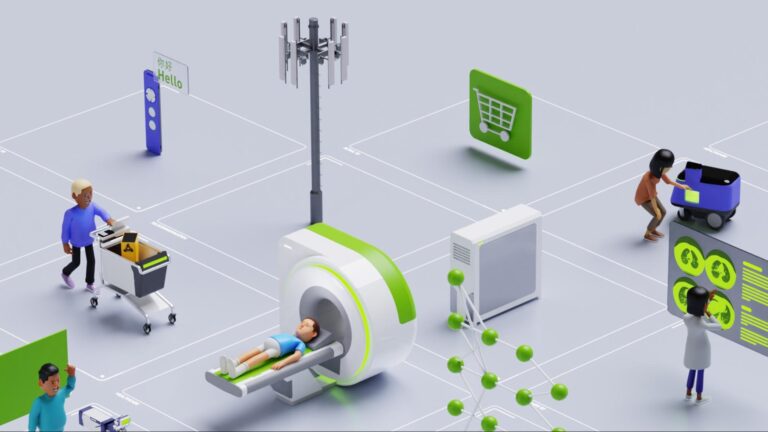 Edge AI developers are building AI applications and products for safety-critical and regulated use cases. With NVIDIA Holoscan 1.0, these applications can…
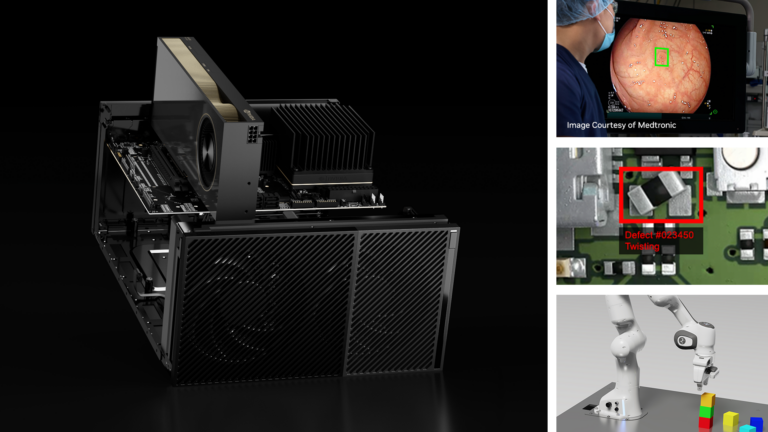 NVIDIA SDKs have been instrumental in accelerating AI applications across a spectrum of use cases spanning smart cities, medical, and robotics. However,…
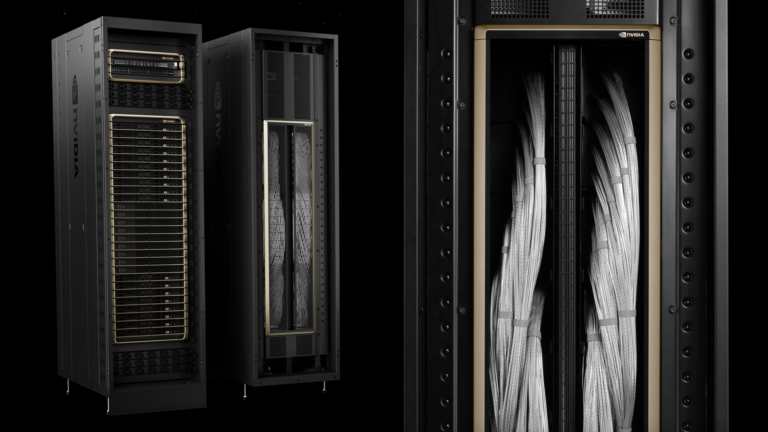 What is the interest in trillion-parameter models? We know many of the use cases today and interest is growing due to the promise of an increased capacity for:…
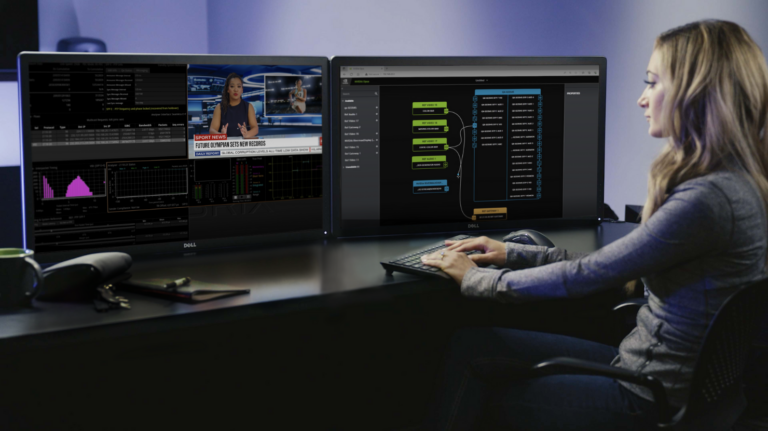 The broadcast industry is undergoing a transformation in how content is created, managed, distributed, and consumed. This transformation includes a shift from…
 Streamline and accelerate deployment by integrating ETL and ML training into a single Apache Spark script on Amazon EMR.
 Explore generative AI concepts and applications, along with challenges and opportunities in this self-paced course.
 Crossing the chasm and reaching its iPhone moment, generative AI must scale to fulfill exponentially increasing demands. Reliability and uptime are critical for…